The Arcadia method is a Model-Based Systems Engineering (MBSE) approach structured around abstraction layers to support the development of complex systems. This guide explains Arcadia step-by-step — from Operational Analysis through Physical Architecture — with a focus on what each layer means, what activities are performed, and how it supports coherent system development.
The matrix is based on the Arcadia method and can be used when:
- Architects starting with the Arcadia method.
- Senior architects planning activities and deliverables an architecture.
- Lead architects need to communicate modelling effort to stakeholders at different levels and remove modelling lack-of-understanding and expectations.
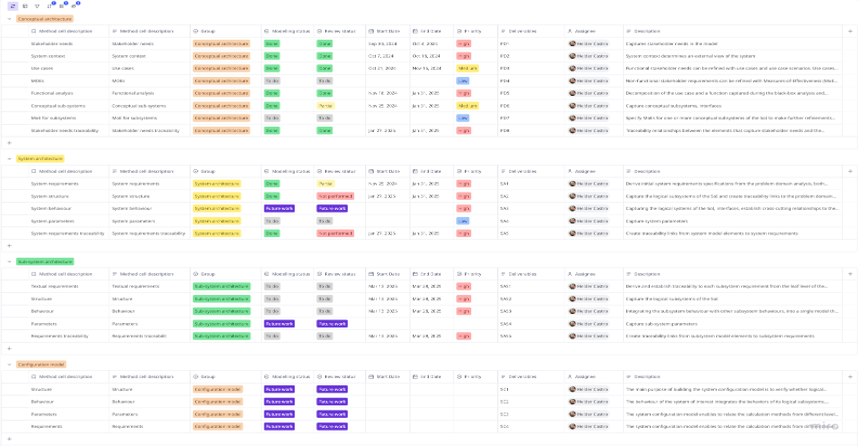
MBSE Arcadia matrix
While Arcadia allows flexibility in development order, the guide presents a reasoned sequence of activities to support learning and practical application.
This guide introduces the Arcadia method through a structured, step-by-step explanation. It is intended as learning guidance for engineers discovering Arcadia and understanding how modelling activities unfold across architecture levels.

MBSE Arcadia Operational Analysis
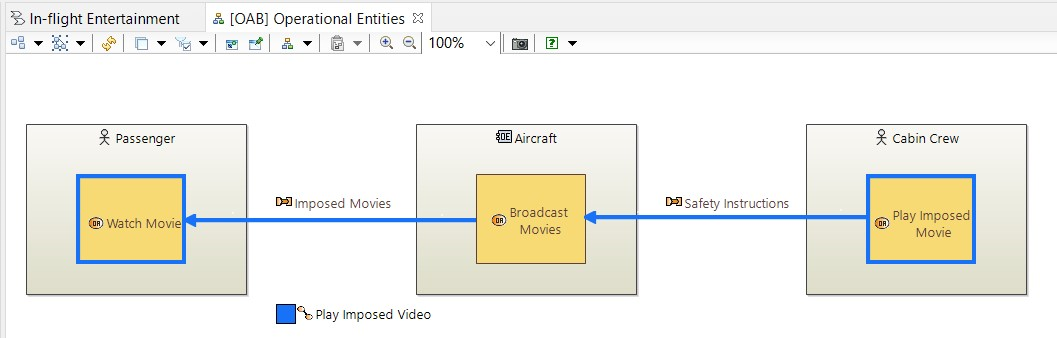
The Operational Analysis, aims at capturing what the user of the system needs to accomplish, hence, the Operational Analysis normally starts by identifying who the users (i.e., Operational Entities and/or Operational Actors) of the future system are, and any containment relationship between them.
Guided step-by-step article capturing activities and expected artefacts describing capturing “What the user of the system needs to accomplish.”.

System Analysis
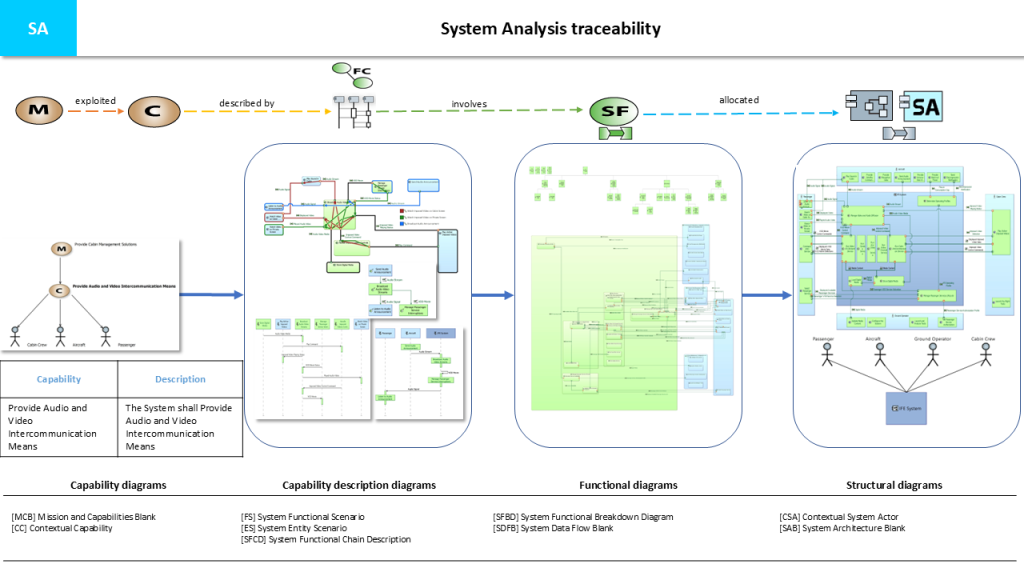
The System Analysis level, is where the System-of-Interest (SoI) to be defined emerges. The following questions for the system definition needs to be answered:
- What must the system do?
- What are the external interfaces to the system?
Guided step-by-step article capturing activities and expected artefacts and describing “What the system must do for the user.“
Logical Architecture
Logical Architecture starts to “opens the box” by implementing the big decisions of the solution, in terms of principles of construction, and ways to fulfil the expectations of stakeholders.
Guided step-by-step article capturing activities and expected artefacts and describing “What the system shall do.”

Physical Architecture
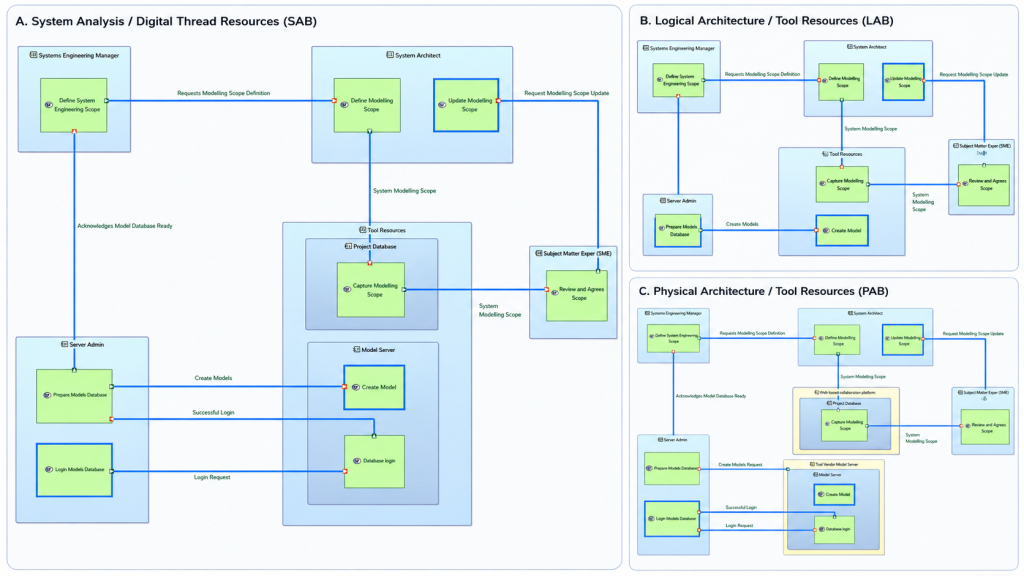
The previous Logical Architecture started by “opening the black box” in order to identify the structural elements called Logical Components, as well as their properties and relations. The important rule followed is to ensure that it was excluded all technological considerations or implementation choices on this level. This is exactly the objective of the Physical Architecture in defining the “real” concrete components that comprise the system.
Guided step-by-step article “How the system shall be built“, defining the “real” concrete components that comprise the system.

MBSE Arcadia data modelling
An important part of system engineering involves ensuring consistency, correctness and completeness between the data managed in the system and the data exchanged with external actors, and components.
In order to, unambiguously describe these exchanges, the data, information, matter flow, etc., must be formalized.
An important engineering task involves avoiding multiple definitions for a single piece of data in different areas of the system. Hence, the need to declare that several exchanges should carry the same type of data, without having to redefine the shared data for each exchange.
Read article.

For readers who want to apply this guidance in a project context, a lightweight roadmap is provided. It summarises activities and artefacts discussed in this guide and can be used as a reference when planning or preparing reviews.

This document includes:
- MBSE Arcadia matrix in one slide
- MBSE with Arcadia steps and diagrams with description
- References to the MBSE with Arcadia step-by-step guide online
This MBSE with Arcadia step-by-step guide is cited by Capella.org as a supporting resource for the Arcadia method

Capella practical example
The MBSE with Arcadia step-by-step guide is complemented by a Capella practical example. This practical guide explores the use of the Capella modelling tool project explorer and other capabilities that intends to reduce time to capture an architecture and automate activities
The full practical example can be found here.